

 My chin nearly hit the floor last year at a conference when an AI consultant stepped up to deliver a keynote on SEO and AI. Within minutes, he declared with confidence that “SEO is dead” and that AI would replace it entirely.
The irony was hard to miss.
The misunderstanding of what SEO actually is or how search engines work, especially from someone positioning themselves as an AI expert, was astonishing. SEO already runs on AI-driven algorithms. Artificial intelligence is not new. It has been powering search for almost 2 decades. Google’s ranking systems rely on machine learning models to interpret intent, evaluate content quality, and determine authority.
Many of the signals used in SEO today are the same types of signals AI systems rely on to assess credibility, relevance, and expertise. Authority, topical depth, engagement signals, contextual relationships, and structured data are not separate from AI. They are foundational to it. That is to say optimizing for SEO and AI in mind would mean that content could achieve outstanding results on search, answer engines and AI LLM’s once authority factors are plugged in.
Yet with every major AI release or advancement, another wave of speculation appears. Headlines resurface claiming traditional search is fading and that optimization is becoming irrelevant.
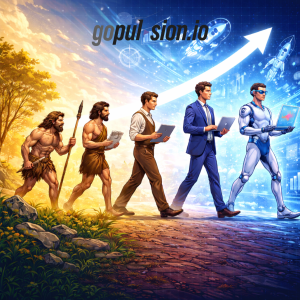
What is actually happening is not the death of SEO. It is the evolution of it.
Search is not disappearing. It is expanding. And optimization is not becoming obsolete. It is becoming more sophisticated.
The reality is far more nuanced.
Search engine optimization has not disappeared. It has expanded. It now operates across traditional search results, AI-generated summaries, conversational interfaces, and recommendation systems. The mechanics of visibility have evolved, but the underlying principles of authority and structure remain intact.
Understanding how search engine optimization has changed is essential for executive teams seeking sustainable growth rather than reactive tactics.
AI Has Not Replaced Search. It Has Reshaped It.
Search engines are now AI-driven systems. Algorithms evaluate context, topical authority, engagement signals, backlinks, structured data, and user behavior simultaneously. In addition, large language models summarize and interpret content before presenting it to users.
This means optimization is no longer about ranking for isolated keywords. It is about becoming a trusted source within a structured topical ecosystem.
AI platforms surface content that demonstrates consistent expertise, strong internal linking architecture, and credible external validation. This is why modern SEO must integrate with answer engine optimization. Visibility now extends beyond blue-link rankings into AI-generated responses.
If your content lacks depth, coherence, and authority signals, AI systems will not prioritize it.
More Content, Not Less
A common misconception is that AI reduces the need for content because answers are summarized instantly. In reality, AI increases the need for authoritative content.
AI systems require source material. They analyze large volumes of content to determine which domains demonstrate consistent expertise. Thin websites with limited topical coverage struggle to compete because they lack the depth required for citation and summarization.
However, content volume alone is insufficient. It must be structured.
Centralized frameworks such as Optimize 360 recognize that authority is built through mapped pillar pages, strategic internal linking, and aligned external signals. Fragmented publishing does not compound authority. Structured ecosystems do.
Authority Signals Are Amplified
Search engine optimization has shifted from keyword density and isolated backlinks toward authority consolidation. Backlinks still matter, but context matters more. Engagement metrics matter. Internal linking matters. Semantic consistency matters.
AI-driven systems evaluate how consistently a brand covers a topic across multiple assets. If a website publishes scattered articles without reinforcing core service pillars, authority signals weaken.
This is where integrated strategies supported by a performance-focused digital marketing agency become critical. SEO cannot operate independently of paid, CRM, and content architecture decisions.
Alignment drives authority.
The Convergence of Paid and Organic
In an AI-first world, paid media and organic search increasingly reinforce one another. Engagement signals from disciplined google ads management can strengthen behavioral metrics observed by search engines. High-intent paid traffic interacting with structured pillar pages improves dwell time and reduces bounce rates.
Meanwhile, strong organic authority lowers acquisition costs in paid channels by improving quality scores and brand recognition.
The separation between SEO and paid media is dissolving. Search engine optimization now operates within a broader performance ecosystem.
US and Canada Context
In North American markets, competition for authority is intensifying. Established enterprises are investing heavily in structured content ecosystems. At the same time, AI-generated summaries are influencing buyer journeys earlier than ever.
Executives in both the United States and Canada must recognize that SEO is no longer a quarterly initiative. It is long-term infrastructure.
Markets are becoming more competitive, not less. AI has lowered content production barriers, but it has raised authority expectations. Brands that demonstrate consistent expertise across mapped content clusters will dominate.
Structure Over Tricks
The era of tactical loopholes is over. Keyword stuffing, thin landing pages, and isolated link schemes no longer produce durable results. AI-driven algorithms detect superficial optimization quickly.
Modern search engine optimization demands structural clarity:
Mapped pillar pages
Strategic internal linking
External authority reinforcement
Schema implementation
Clear conversion pathways
CRM alignment
When these elements align, visibility compounds. When they operate independently, performance fluctuates.
For organizations uncertain of their current authority position, the AI and Search Engine Impact Report provides a clear benchmark across traditional search and AI environments.
SEO Is Evolving Upward
The narrative that SEO is dying overlooks a fundamental truth: optimization is becoming more sophisticated, not less relevant.
Search engine optimization now encompasses traditional rankings, AI summaries, conversational search, and recommendation algorithms. It influences brand perception before prospects ever visit a website.
Rather than shrinking in importance, SEO has expanded in scope.
Organizations that treat it as infrastructure will benefit. Those that treat it as a tactical checkbox will struggle.
Executive Perspective
For CEOs and CMOs, the question is not whether SEO works. It is whether your organization has adapted to how search engine optimization has changed.
Is your content mapped around authority pillars?
Are paid campaigns reinforcing organic strategy?
Is AI visibility improving alongside rankings?
Are conversion pathways structured clearly?
If these elements are disconnected, optimization efforts will underperform.
Final Perspective
SEO in the AI era is not about gaming algorithms. It is about building systems that algorithms trust.
Authority, alignment, and structure determine visibility. Content must be centralized. Channels must reinforce one another. Measurement must be holistic.
Search engine optimization has changed, but its strategic importance has only increased.
To explore how centralized authority frameworks position brands for AI-era dominance, visit digital marketing agency Pulsion and learn how we build infrastructure designed for compounding performance.