
 Most American companies compete aggressively for English-language keywords.
Fewer compete seriously in Spanish. That imbalance creates opportunity.
SEO in Spanish is not about translation. It is about reach, authority, and competitive positioning in a market that many brands still underestimate. In an AI-driven search environment, linguistic visibility directly influences authority signals and revenue potential.
The Size of the Market
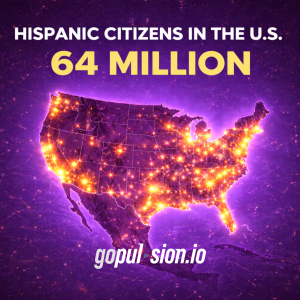
Spanish is the second most spoken language in the United States. According to the U.S. Census Bureau, more than 42 million people speak Spanish at home. When bilingual speakers are included, the number exceeds 60 million.
This is not a niche segment.
It represents consumers, small business owners, senior executives, and decision-makers across industries. Many bilingual professionals search in Spanish even when fluent in English, particularly when researching complex or culturally contextual topics.
In addition, Spanish-language search competition is often lower than equivalent English search categories. That dynamic alone creates strategic leverage for organizations willing to invest in structured multilingual visibility.
Search Behavior Has Shifted
Search behavior in 2025 reflects a growing comfort with multilingual digital consumption. Buyers frequently switch between English and Spanish during research phases. AI-driven search interfaces also recognize and respond to multilingual queries more fluidly than ever before.
This shift means that SEO in Spanish is no longer optional for brands operating in competitive US markets. AI systems evaluate authority across languages. If your brand demonstrates expertise only in English, you limit interpretability across segments.
Modern answer engine optimization must account for multilingual content architecture. AI systems surface responses based on structured topical depth regardless of language. Brands that build authority clusters in Spanish increase their probability of appearing in AI-generated summaries.
Competitive Gaps Create Opportunity
Many competitors still rely on basic translation tools or ignore Spanish content entirely. That creates an authority gap.
When organizations invest in structured Spanish-language pillar pages, mapped internal linking, and culturally aligned messaging, they gain disproportionate visibility in underdeveloped segments.
This is not about duplicating English content word for word. It is about building contextual relevance. Spanish-language buyers may search differently, prioritize different terms, and respond to different messaging structures.
Centralized authority frameworks such as Optimize 360 ensure that multilingual content is mapped strategically rather than replicated mechanically.
International and Cross-Border Buyers
SEO in Spanish also supports international visibility beyond US borders. Latin American markets are growing digitally at accelerated rates. US-based companies offering services internationally can strengthen cross-border authority by structuring Spanish-language content clusters.
AI systems interpret multilingual authority as depth rather than duplication when implemented correctly. However, improper multilingual implementation can create duplication penalties and crawl confusion.
This is why structural clarity matters.
Working with a structured digital marketing agency that understands multilingual SEO architecture ensures that Spanish-language authority reinforces rather than weakens domain strength.
Executive Demographics
An overlooked factor is the growing number of Spanish-speaking executives within US markets. Senior leaders across industries increasingly represent bilingual or multicultural backgrounds.
Executive-level searches for B2B services often occur in both languages, especially during early research stages. If your brand is not visible in Spanish queries, you may be absent from critical discovery phases.
In AI-driven environments, this absence compounds. If large language models do not encounter structured Spanish-language authority from your brand, your inclusion probability declines across multilingual queries.
English Competition Versus Spanish Leverage
English search categories are saturated. Competition is intense. Authority thresholds are high. Paid acquisition costs continue rising.
Spanish-language equivalents often present lower competition, lower acquisition costs, and faster ranking potential when structured correctly.
Effective google ads management can also benefit from bilingual strategy. Paid campaigns aligned with mapped Spanish authority pages reduce acquisition friction and increase engagement among bilingual audiences.
The advantage lies not just in traffic volume but in strategic differentiation.
AI Language Models and Authority Signals
AI language models increasingly operate across multilingual datasets. They evaluate structured content relationships regardless of language, provided semantic coherence and authority signals are consistent.
When Spanish-language content is mapped intentionally within broader authority clusters, it strengthens interpretability. When it is isolated or poorly translated, it weakens credibility.
Organizations unsure of their multilingual authority positioning should begin with structured benchmarking. The AI and Search Engine Impact Report reveals visibility gaps across search and AI environments, including multilingual presence.
Without measurement, multilingual investment becomes guesswork.
Language Is Reach, Not Translation
SEO in Spanish is not a translation project. It is a reach strategy.
Language influences cultural nuance, search phrasing, and content expectations. A direct English-to-Spanish conversion may preserve words but lose contextual authority.
Successful multilingual SEO requires intentional content mapping, structured internal linking, and alignment with conversion pathways.
When executed properly, it expands authority without fragmenting domain signals.
Executive Perspective
For CEOs and CMOs, the question is not whether Spanish-speaking consumers exist. The question is whether your brand has built structured authority to reach them.
Are your service pillars mapped in Spanish?
Are internal links reinforcing multilingual clusters?
Are AI platforms surfacing your brand across languages?
Are paid campaigns aligned with bilingual authority pages?
If these elements are absent, opportunity is being left unclaimed.
Final Perspective
In the AI-first era, visibility is language-agnostic but authority-dependent.
Brands that invest in structured SEO in Spanish gain competitive leverage in a rapidly growing segment. Those that ignore multilingual architecture risk stagnation in saturated English-only categories.
If your organization wants to expand reach, strengthen AI visibility, and build durable authority across languages, visit digital marketing agency Pulsion and explore how centralized authority systems drive multilingual growth.